Undergraduate Program

BS Robotics and Intelligent Systems

Introduction

BS in Robotics and Intelligent Systems at the Faculty of Engineering, Salim Habib University is a comprehensive four-year undergraduate program designed to prepare students for the fast-growing and interdisciplinary domains of robotics, artificial intelligence (AI), and intelligent automation. The program blends strong theoretical foundations with hands-on practical experience, enabling graduates to design, develop, and deploy intelligent systems that can operate in real-world environments.

Carefully structured to meet both academic and industry demands, the curriculum integrates core engineering principles with modern computational techniques. Students gain in-depth knowledge of robotics, machine learning, control systems, embedded systems, computer vision, and human-machine interaction. Throughout the program, emphasis is placed on problem-solving, innovation, and system-level thinking.

The program ensures that students graduate with:

Strong Engineering Foundations
A solid understanding of mathematics, physics, programming, and electronics, which form the backbone of robotics and intelligent systems.

  • Interdisciplinary Skillset
    The ability to integrate concepts from mechanical, electrical, and computer engineering to design complex robotic systems.
  • Hands-on Experience
    Extensive laboratory work, design projects, and prototyping opportunities that allow students to build and test real robotic applications.
  • Expertise in AI and Intelligent Systems
    Practical exposure to machine learning, deep learning, and data-driven decision-making for autonomous and intelligent behavior.
  • Industry-Relevant Knowledge
    Familiarity with modern tools, platforms, and technologies used in robotics, automation, and AI industries.
  • Research and Innovation Capabilities
    Opportunities to work on cutting-edge research projects, encouraging critical thinking and innovation in emerging technologies.
  • Professional and Entrepreneurial Skills
    Training in teamwork, communication, project management, and entrepreneurship to prepare graduates for leadership roles or startup ventures.
  • Capstone Design Experience
    A final-year project that challenges students to solve real-world problems by designing and implementing complete robotic or intelligent systems.

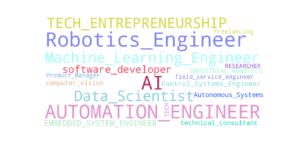
Graduates of this program are well-positioned for diverse career paths, including robotics engineering, AI development, automation engineering, embedded systems design, and research and development. They may also pursue advanced studies in robotics, artificial intelligence, or related engineering disciplines.

With its strong focus on innovation, practical learning, and industry alignment, the BS in Robotics and Intelligent Systems at Salim Habib University aims to develop future-ready engineers capable of shaping the next generation of intelligent technologies.

About Program

PEO-1: Graduates would be competent individuals in their respective field to meet the technological challenges related to design, develop, and implement intelligent robotic systems for diverse applications.

PEO-2: Graduates would reflect moral values, ethical and professional attitude, leadership skills as well as entrepreneurial qualities.

PEO-3: Graduates would be able to engage in lifelong learning and support the global community with involvement in emerging technological research and development.

Robotics Engineer: Design, build, and maintain robotic systems to enhance automation and efficiency in various industries.

AI and Machine Learning Expert/Developer: Develop intelligent algorithms that enable robots and systems to learn from data and make autonomous decisions

Data Scientist: Analyze and interpret data to improve the performance and capabilities of intelligent robotic systems.

Computer Vision Engineer: Create systems that enable robots to interpret and process visual information for navigation and interaction.

IoT and Embedded Systems Engineer: Design and integrate smart devices that communicate within the Internet of Things to support intelligent robotic systems.

Autonomous Systems Engineer: Design and develop self-operating robots and systems for applications such as autonomous vehicles and drones.

Automation Engineer: Implement automated robotic systems to enhance efficiency and productivity in industrial operations.

Tech Entrepreneur: Innovate and launch businesses focused on advanced robotics and intelligent system technologies.

Software Developer: Create software that enables robots and intelligent systems to perform complex tasks and solve real-world problems.

Smart Systems Developer: Design integrated intelligent systems that enhance the functionality and connectivity of robotic devices and environments.

Freelancer: Offer specialized services in robotics and intelligent systems, working on diverse projects across industries.

Researcher: Conduct research in robotics and intelligent systems, contributing to advancements and technological breakthroughs.

Control Systems Engineer: Design control systems that govern the behavior and performance of intelligent robotic systems.

Product Manager: Oversee the development and launch of robotics and intelligent systems products, ensuring they meet market needs and business objectives.

Technical Consultant: Provide expert advice on implementing and optimizing robotics and intelligent systems for various clients.

Field Service Engineer: Install, maintain, and repair robotic and intelligent systems, ensuring optimal performance in real-world environments.

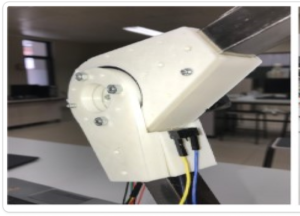
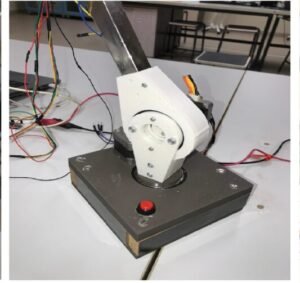
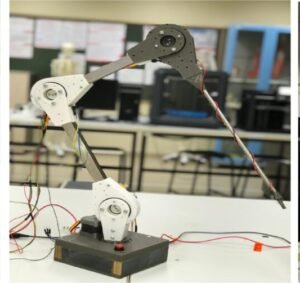
From Concept to Showcase: Students Designing, Building, and Presenting Their Innovative Project “Robotic Grasper with An Integrated Haptic Feedback Mechanism”

The Robotic Grasper with an Integrated Haptic Feedback Mechanism exemplifies the cutting-edge work being done within the Faculty of Engineering. Developed using our state-of-the-art in-house 3D printing facility, this project highlights the advanced capabilities of our engineering students and faculty. Leveraging on-campus 3D printing resources allows us to create highly precise and customized components, ensuring optimal performance and functionality.

We are especially proud of faculty of Engineering students behind this project—Syeda Fakhra Jalal, Zarish Majid Shaikh, and Mirza Areeb Baig. Their innovative Robotic Grasper has secured 3rd place in the final round of the prestigious IEEE Region 10 Robotics Competition, one of the leading robotics challenges in the Asia-Pacific region. This achievement marks the second consecutive year that a team from SHU has secured a spot in this elite competition, underscoring our commitment to hands-on learning and technological excellence.

Scheme of Study

  • Duration: 4 Years
  • Semesters: 8
  • Credit Hours: 140


Total Credit Hours16

Course Code Course Title Credit Hours
MTH 100 Basic Mathematics 3+0
PHC101 Applied Physics 2+1
IST101 Islamic Studies/Ethical Behavior 2+0
ENG104 Functional English 3+0
BME-105 Applications of Information and Communication Technologies 2+1
RIS106 Ethics of AI 2+0
RIS101 Engineering Workshop 0+1
RIS105 Introduction to Robotics & Intelligent Systems 1+0
Total Credit Hours (12+3)=15


Course Code Course Title Credit Hours
RIS107 Chatbots and Conversational AI 0+1
LAN101 Foreign Language 2+0
MTH103 Calculus & Analytical Geometry 3+0
RIS103 Engineering Mechanics 2+1
RIS104 Object Oriented Programming 3+1
ELE203 Digital Logic Design 3+1
Total Credit Hours (14+4)=18
Course Code Course Title Credit Hours
MTH201 Linear Algebra & Differential Equations 3+0
RIS201 Data Structures & Algorithm 2+1
ELE10x Electrical and Electronic Fundamentals 2+1
PST101 Pakistan Studies 2+0
ENG102 Expository Writing 3+0
RIS202 Robotic Systems 3+0
BME103 Occupational Health and Safety 1+0
Total Credit Hours (17+2)=19


Course Code Course Title Cr. Hrs (TH.)
HUS208 Civics and Community Engagement 2+0
PST102 Ideology & Constitution of Pakistan 2+0
MGT40X Entrepreneurship 2+0
MTH301 Statistics 3+0
ELE30X (T/L) Signals & Systems 2+1
ELE10x (T/L) Circuit Theory 2+1
RIS242 (T/L) Operating System 2+1
Total Credit Hours (15+3)=18


Course Code Course Title Cr. Hrs (TH.)
RIS331 (T/L) Theory of Automata 3+0
MTH302 Numerical Analysis 3+0
RIS212 (T/L) Linear Control System 3+0
RIS332 (T/L) Artificial Intelligence 2+1
RISXXX Instrumentation and Measurement 3+1
RIS322 (T/L) Embedded System 2+1
Total Credit Hours (16+3)=19


Course Code Course Title Cr. Hrs (TH.)
RIS211 (T/L) Information security 3+0
RIS313 (T/L) Computer Vision 3+0
RIS333 (T/L) Introduction to Deep Learning 2+1
RIS323 (T/L) Actuator 3+0
RIS343 (T/L) IoT & Sensor Network 3+0
XXXxxx Professional Certification I 0+1
XXXxxx Professional Certification II 0+1
Total Credit Hours (14+3)=19


Course Code Course Title Cr. Hrs (TH.)
RIS449 Final Year Design Project – I 0+3
RIS444 (T/L) Cloud Computing 3+0
RISXXX (T/L) Human-Robot Interaction 3+0
XXXxxx Professional Certification III 0+1
XXXxxx Elective I 3+0
XXXxxx Elective II 3+0
Total Credit Hours (12+4)=16


Course Code Course Title Cr. Hrs (TH.)
RIS449 Final Year Design Project – II 0+3
MGT4XX Principles of Management and Economics 2+0
RISXXX Product Design and Development 2+0
RIS445 (T/L) Industrial Automation 2+0
XXXxxx Elective III 3+0
XXXxxx Elective IV 3+0
Total Credit Hours (12+3)=15

FAQ

What is the duration and structure of the BS Robotics and Intelligent Systems program at Salim Habib University? +
What are the career prospects for graduates of the BS Robotics and Intelligent Systems program? +
What hands-on learning opportunities are available in the program? +
What are the primary objectives of the BS Robotics and Intelligent Systems program? +
What notable achievements have students in the program accomplished? +
Scroll to Top